 (EN)
(EN)
 (ES)
(ES)
 (IT)
(IT)

How to be a good university professor?
The secret: caring for your students and helping them grow by building on their strengths
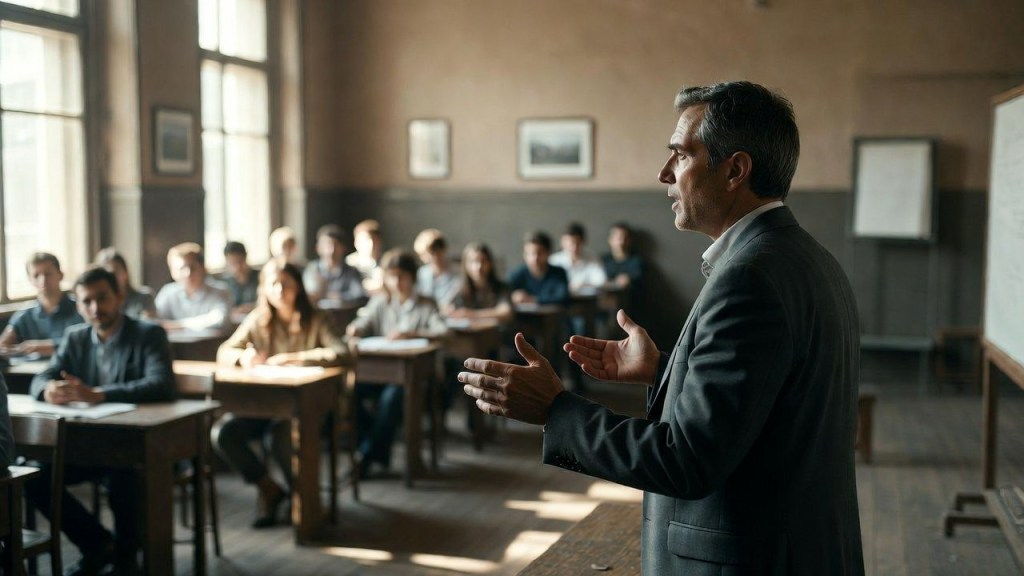

I remember years ago, a prestigious professor at the university where I was teaching asked me, “Do you want to be a good university professor?” The question was rhetorical, as he then answered it by saying, “If you want to be a good university professor, love your students, accept them as they are, with their strengths and weaknesses, and above all, try to help them improve, building upon their virtues and positive qualities .” Naturally, I have never forgotten that advice and have tried to live by it throughout my teaching career as a university professor.
At the end of the academic year, I always take stock of the results. I don’t just analyze the final grades. I also reflect on the learning outcomes. I ask myself questions like: Have any students improved in their professional development? Have I managed to get them to take an active attitude, showing interest in the subject I teach? Have there been any initiatives to improve the different activities carried out in class? These questions help me draw conclusions and specify some changes in the content of each subject and in the methodology used.
At least once a year, I revisit the conclusions of a book I found fascinating: ” What the Best College Professors Do. ” Written by Ken Bain, director of the Center for Teaching Excellence at New York University, the book rests on two key ideas: first, one can learn to be a good professor ; second, the best way to do so is to observe what the best professors do . But who are the best? According to the author, they are not the most engaging professors or those who are most popular with their students, but rather those who achieve extraordinary learning outcomes . Two aspects characterize them: their students are satisfied with the teaching and feel motivated to continue learning; and what they learn is truly valuable and substantive.
The research behind this book lasted more than fifteen years, during which some seventy professors from twenty-five different universities were studied . What conclusions did it reach?
First : without exception, outstanding professors know their subject extremely well . But they are not mere scholars. They use their knowledge to get to the heart of the matter, to the fundamental principles and basic concepts; they are able to simplify the complex in ways that motivate learning. They also have an intuitive understanding of human learning.
Second : they place great importance on their teaching , as much as on their research. When planning their lessons (seminars, practical sessions, tutorials), they set learning objectives.
Third : they are demanding of their students and expect a lot from them. But they set objectives linked to their students’ career prospects and the training they will need throughout their lives; in other words, they don’t impose arbitrary difficulties.
Fourth : In their lessons they try to create an environment for natural critical learning , in which students confront their own education, work in collaboration with others, and rely on the evaluation of their assignments.
Fifth : They trust their students, are frank and open with them, and are always kind.
Sixth : They evaluate the outcome of their task and know how to correct it when necessary . They grade students according to basic learning objectives.
What has been said so far does not mean that these teachers are perfect. Like everyone, they make mistakes, but they don’t blame the students for them . Furthermore, they take into account what their colleagues do, discuss with them how to improve student learning, and are never completely satisfied with what has already been achieved. The book, which won the prize awarded annually by Harvard University Press for an outstanding work on education and society , is aimed at teachers, but its conclusions may also be of interest to students, their parents, and the managers of the companies where they will do internships or work as trainees.
Bain has published other books . I find it interesting to highlight his book, What the Best College Students Do. It was also discussed on this blog in a post titled: What are the best college students like? In this book, he analyzes the attitudes of college students who have gone on to succeed in their professional careers.
I am convinced that good students help professors improve , challenge them, and facilitate their teaching and training activities with the right attitude. They ask interesting questions, help their classmates, take initiative, and so on. This explains why good universities select students. This enhances the university’s prestige and, above all, fosters a true community of students and professors.
See also: ” University students prefer a good professor even if they don’t use technology.”

Marketing y Servicios
Ideas para mejorar el mundo . Director: José Miguel Ponce . Profesor universitario e investigador en Marketing y Gestión de Servicios, con experiencia en cinco universidades públicas y privadas. Sevillano de origen, ha vivido en varias ciudades de España y actualmente reside en Sevilla. Apasionado por la educación, la comunicación y las relaciones humanas, considera la amistad y la empatía clave en su vida y enseñanza. Ha publicado investigaciones sobre Marketing, Calidad de Servicio y organizaciones sin ánimo de lucro. Humanista y optimista, promueve el agradecimiento y la coherencia como valores fundamentales.
Related

Pope Leo XIV’s First Holy Week: A Call to Light, Hope, and Peace in a World of Darkness
Valentina Alazraki
07 April, 2026
4 min

Living with Meaning and Purpose
María José Calvo
07 April, 2026
4 min

The “steps” that EASTER asks of us all
Mario J. Paredes
04 April, 2026
4 min

The Cross
Juan Francisco Miguel
04 April, 2026
3 min