 (EN)
(EN)
 (ES)
(ES)
 (IT)
(IT)

Grandparents as Guardians of the Memory of Faith
Their Key Role in the Transmission of Tradition
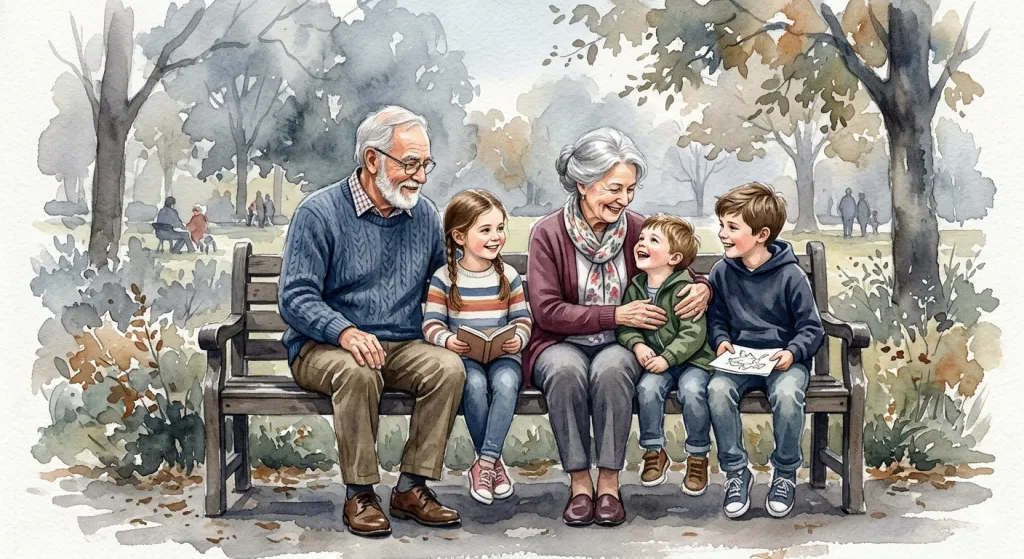

In a society that often marginalizes the elderly, reducing them to a burden or a nostalgic memory, the Catholic Church invites us to rediscover the beauty and fruitfulness of old age. Grandparents are not only witnesses to the past: they are living guardians of the memory of faith, indispensable bridges between generations, and bearers of a Tradition that is transmitted not only with words, but with their entire lives. This article, deeply rooted in official Catholic sources—from St. John Paul II’s Letter to the Elderly (1999) to Pope Francis’s messages for the World Day of Grandparents and Older Persons, including Amoris Laetitia and the Guidelines for the Pastoral Care of Older Persons from the Spanish Episcopal Conference (2022)—analyzes this key role, presents real-life profiles of grandparents who embody it, and offers constructive and hopeful proposals for parishes.
The Church’s teaching: the elderly, living memory of the faith
Apostolic Tradition is not a dusty archive, but a living reality transmitted “from generation to generation” (Lk 1:50). Saint John Paul II, in his Letter to the Elderly , expresses this with prophetic clarity: “In every family, grandchildren receive their first education in the faith from their grandparents.” The elderly are “living libraries” of wisdom, capable of offering “advice born of experience” and of proclaiming, even in frailty, that “in old age they will still bear fruit and be green and ready to proclaim that the Lord is righteous” (Ps 92:15). This is not a secondary task, but a vocation: old age is “a time of extraordinary grace” that opens “unprecedented opportunities for prayer and union with God.”
Pope Francis takes up and deepens this vision in Amoris Laetitia . In paragraphs 192-193, he affirms that “it is often grandparents who ensure the transmission of great values to their grandchildren, and many people can recognize that they owe their initiation into the Christian life precisely to their grandparents.” Their stories “do a great deal of good for children and young people, as they connect them with the lived history of their family, neighborhood, and country.” A family that ignores its grandparents—“its living memory”—disintegrates; on the other hand, “a family that remembers is a family with a future.” The elderly are a bridge between generations and an antidote to the “throwaway culture” and “contemporary orphanhood.”
The annual messages for the World Day of Grandparents and Older Persons (instituted by Francis in 2021) reaffirm this call. In 2023, with the theme “His mercy extends from generation to generation,” the Pope reminds us that the elderly “guardian memory and transmit our belonging to the holy People of God,” handing down to the present a past necessary for building the future. Young people need their wisdom; the elderly, the joy of the young. In 2024, under the motto “In my old age, do not abandon me” (Psalm 71:9), he insists: God never abandons his children, and neither should the Church. The elderly are “a sure foundation for the spiritual building” (cf. 1 Peter 2:5), and their prayer is a treasure for the entire community.
The Guidelines for Pastoral Care of the Elderly from the Spanish Episcopal Conference (2022) take a practical, diocesan step: the elderly are “witnesses of history, protagonists of today, and agents of the Church’s future.” They are called to be “heralds of the faith, especially in transmitting it to their families,” custodians of traditions, and catechists by experience. Old age is not a decline, but rather “a wealth of fruits and blessings.”
Profiles that inspire: grandparents who live their calling
This teaching is not merely theoretical. Let’s look at specific examples of grandparents who, with simplicity and faithfulness, become guardians of the memory of faith.
Don Antonio, leader of prayer groups. Retired, widowed, and with arthritis that makes it difficult for him to move, he coordinates a group of “intercessory grandparents” in his parish. Every Tuesday, they gather about ten seniors to pray the Rosary for the young families of the community. “I can no longer run like I used to,” he says, “but I can cry out to the Lord for my grandchildren and for the children of others.” His silent prayer, inspired by Psalm 71, becomes an invisible support for marriages in crisis and young people searching for their path. As Pope Francis teaches, his presence is “precious,” and his intercession is an answer to Ruth’s plea to Naomi: “I will not leave you!”
Doña Carmen, storyteller of saints. Every Sunday, after Mass, she gathers her six grandchildren around an old illustrated Bible. She tells them the stories of Saint Thérèse of Lisieux, Saint John Bosco, and Our Lady of Guadalupe “as if they were family.” She doesn’t read from a catechism book; she shares her own experience of faith lived in the postwar years. Her stories, like the narratives of the elderly in Amoris Laetitia, no. 193, connect the children to “lived history” and make them feel like heirs to a large family of faith. Many adults today recognize, as the Pope says, that “they owe their initiation into the Christian life precisely to their grandparents.”
Digital Grandparents: Pedro and María. Both over 75, they learned to use video calls and social media during the pandemic. Now they record short testimonies of faith for their grandchildren who live far away and share them in a family WhatsApp group. Pedro explains the Sunday Gospel in simple language; María sends images of saints with a brief reflection. In this way, they provide spiritual support to their university-aged grandchildren. The Church, which in the Guidelines of the Spanish Episcopal Conference (CEE) values the commitment of the elderly even in pastoral care related to health and charity, sees here a new frontier: the elderly not only receive, but also evangelize in the digital world.
These profiles are not exceptions. They are the concrete face of a universal vocation: that of the elderly who, like Mary and Elizabeth, encounter new generations and ensure that “mercy extends from generation to generation.”
Concrete proposals for parishes: building intergenerational bridges
The Church not only values this silent contribution; it encourages it with concrete actions. Here are practical proposals, directly inspired by the cited documents and adaptable to any parish:
- Intergenerational workshops “Memory and Future .” Once a month, grandparents and grandchildren meet to share: the older ones recount an episode from their life of faith; the younger ones teach how to use a prayer app. The goal: to experience that “the old together with the children” sing to the Lord (Psalm 148:12).
- “School for Evangelizing Grandparents .” A parish (or diocesan) short training course—four sessions—that equips seniors with skills in: storytelling about saints, leading prayer groups, digital accompaniment, and preparing “spiritual wills” for their grandchildren. The Spanish Episcopal Conference (CEE) suggests this initiative when promoting volunteer training and annual conferences on pastoral care for the elderly.
- Mixed prayer and mission groups . Grandparents lead prayer in youth groups; young people accompany lonely grandparents on home visits. In this way, Pope Francis’s wish is fulfilled: “Let us not leave them alone.”
- Annual celebration of World Grandparents Day with the awarding of “guardians of memory certificates” and a special blessing to those who lead faith transmission initiatives.
These initiatives do not require large resources: only pastoral will, spaces for encounter and the recognition that the elderly are not “disposable material”, but “a wealth of fruits and blessings”.
A horizon of hope
Grandparents, in their apparent frailty, are a living sign that God “does not abandon” his children. Their silent contribution—constant prayer, stories of saints, and close companionship—is the most effective antidote to a society that marginalizes the elderly and, in doing so, uproots itself. As the entire Church teaches, valuing the elderly is not only an act of justice: it is an act of faith in Providence, which makes every stage of life fruitful.
May every parish become a home where grandparents and grandchildren meet, where Tradition is passed on with tenderness, and where old age shines as what it has always been: a gift to the Church and to the world. “Do not forsake me in my old age,” cries the psalmist. The Christian response is clear: “We will not forsake you! For in you, grandfather, grandmother, we recognize the very face of God who accompanies us from generation to generation.”
May the Lord, who never abandons his children, grant us all – young and old – the grace to walk together, safeguarding the memory of faith and building a future full of hope.

Miguel Morales Gabriel
Soy un jubilado empresario católico, esposo devoto, padre esforzado, abuelo cariñoso y amigo leal; fundador de su empresa familiar donde lideró con integridad durante décadas generando empleo y desarrollo local, siempre guiado por su fe, la solidaridad comunitaria y el amor incondicional a su esposa, hijos y nietos, viviendo con el lema de servir con humildad.
Related
Saint Thomas More: A Non-Negotiable Conscience
Javier Ferrer García
08 April, 2026
4 min
Romana Editorial releases “The Power of the Gospel” by Pope Leo XIV: Christian Faith in 10 Key Words
Exaudi Staff
08 April, 2026
2 min

From Bustle to Sacred Silence: The Fulfilled Vocation of Parents
Laetare
07 April, 2026
5 min

Poland: Another Step in the Coup d’État
Wlodzimierz Redzioch
07 April, 2026
5 min