 (EN)
(EN)
 (ES)
(ES)
 (IT)
(IT)

“Francis called me son”
Salvatore Cernuzio recounts his filial bond with Pope Francis: confidences, irony, and the final "thank you, excuse the inconvenience"
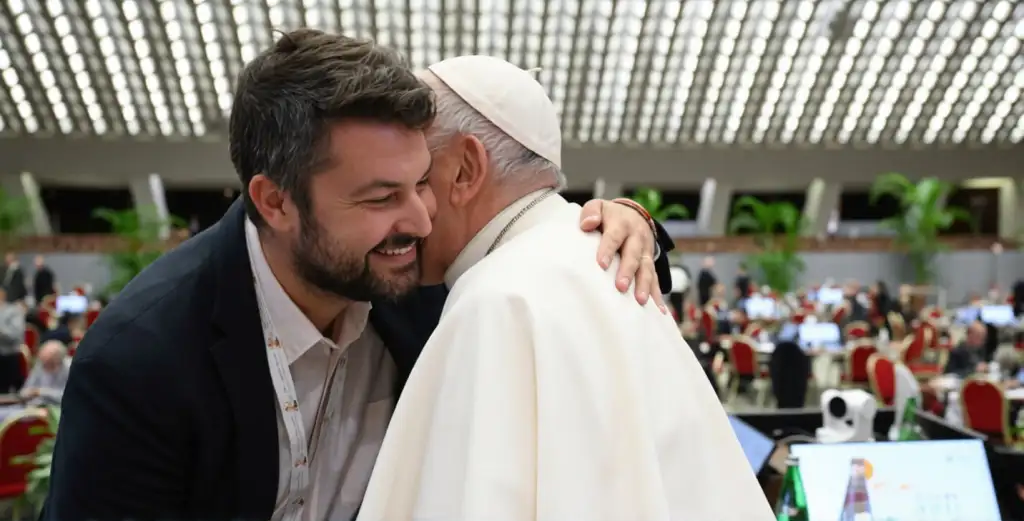

The Pope behind the Pontiff: a dialogue with Salvatore Cernuzio about his book “Father”
The figure of Francis has been analyzed through countless lenses: that of the diplomat, the reformer, or the theologian of the peripheries. However, few have had the privilege of crossing the threshold of Vatican solemnity to discover the man who, amidst jokes and moments of profound confidence, simply became a father. In his new book, Salvatore Cernuzio momentarily sets aside the rigor of the chronicler to offer a testimony born of a gift received: a personal relationship built on listening and closeness.
What began as a professional relationship transformed, over time, into a filial bond, sealed by moments of extreme vulnerability, such as that special greeting at the start of a hospital stay. In this interview for Exaudi, Cernuzio reveals the inner workings of a work that is both catharsis and tribute. From the stories of a Pope who dismantled formality with irony, to his most intimate desires to become a “bridge” in martyred lands like Kyiv and Gaza, emerges the portrait of a man who never hid his humanity, made up of virtues, flaws, and an unwavering faith.
Let us relive together the lessons of a teaching that pushed journalists to “get their shoes dirty” and discover the prophetic legacy of a Pontiff who knew how to look the world in the eye, until his last and humble expression of gratitude.
Salvatore, this book stems from a personal relationship. When did you realize that you were no longer just writing about a Pope, but about a father?
I never wanted to write a book about Pope Francis because I was afraid of giving the impression that, now that he was dead, I was making intimate and private moments public. However, a colleague and friend opened my eyes by suggesting that I write down everything I had seen, experienced, and heard. “For myself and my children,” she said, “before time erases them from memory.” So I began to jot down many conversations and scenes that were in my mind. It took shape, and above all, I thought it might be good to share with others this gift that, I still don’t know why, I have received.
Your book feels intimate. It doesn’t seem like a biography, but rather a conversation over time. When did you realize that your relationship with Francis had transcended the purely journalistic realm and become something more intimate, almost filial?
In the end… I mean, in that famous encounter at the hospital I mention in the first chapter. It wasn’t that Francis hadn’t shown or revealed his affection for me in previous years, but I knew he loved many people, whom he received frequently, to whom he dedicated time, and whom he called “children.” Including journalists. I always thought I was just one among many. However, the fact that he thought of me at a moment of utmost uncertainty, at the beginning of his hospitalization, just to say hello because he didn’t know how his illness would end, made me realize that perhaps, just perhaps, I held a special place in his heart.
The title, Father, is simple and yet very profound. Who does it really refer to? Does it refer to the Pope, the priest, the pastor… or also to the man who personally accompanied you?
He names the Jesuit priest that, deep down, he felt he was; the spiritual father who confessed him before Easter and gave him absolution every time he left; the priest to whom he could tell everything, even very private things, and who had time to listen, a word of advice and guidance, and with whom he shared snacks and gifts.
Was there a specific episode that made you choose this title?
Not one in particular. I called him that from the beginning. It came naturally. He never corrected me, and from then on, he stuck as “father.”
The last words of Francis that you recounted were disarmingly humble. What did you feel when you heard them? That “thank you, excuse the inconvenience” before he died has something profoundly evangelical about it. Did witnessing such an ending change you personally?
These words perfectly reflected his character. He was quite uncompromising when it came to politeness, both giving and receiving it. For example, he always stood up when a guest entered his apartment, even if it was a great effort. When returning from the garage after his walks around Rome, he would wait until everyone had gotten out and then stand in the doorway to greet them. I wasn’t surprised that he said those words of thanks to the nurse, Stefano. I was, however, touched, because like all elderly people, he suffered from his limited independence, and perhaps at that moment he was genuinely feeling “bothered.”
What does this say about his approach to authority?
He valued everyone who worked for him: from the secretaries to the gendarmes and the cooks at Santa Marta. There were people he always wanted present, and he governed while always keeping in mind the difficulties and weaknesses of the people. Sometimes he might get angry about something or make impulsive decisions, but his greatness lay precisely in that: he never hid his humanity. Made up of virtues and flaws, but always, as he said, accompanied by the grace of God.
The book reveals desires that Francis was unable to fulfill: Gaza, Kyiv, even the Canary Islands. What do these destinations reveal? More than journeys, they seem like pastoral gestures. Did he speak of them as a diplomatic strategy or as a heartfelt impulse? What did he say when he thought of the children of war?
Kyiv wanted to visit Gaza alone, along with Moscow. It was an idealistic project; he wanted to be the bridge, the key to dialogue. There was undoubtedly a diplomatic strategy behind it. Gaza was a simple desire: to embrace and touch with his own hands those children whom, after more than 400 calls, he had come to know by their faces and names. And perhaps his presence would have brought about a truce. The Canary Islands were the third act after Lampedusa and Lesbos: Pope Francis once again at the heart of the migrant tragedy.
In your story, a profoundly human Pope emerges: ironic, affectionate, spontaneous. What trait surprised you most about him away from the cameras? There are moments when Francis dismantles Vatican solemnity with a joke. What everyday gesture best reveals the man behind the pontificate?
Well, jokes and humor were really his specialty. He was charming and liked to be liked: whether it was me, a nun, a cardinal, a king, or a prime minister, he would break the ice with some humorous, sometimes even irreverent, remark. He had a great sense of irony, an incredible memory, and the ability to make you feel, in that moment, heard and seen.
Is this book also your personal farewell? Besides the portrait of the Pope, a restrained emotion is palpable. Was writing *Father* also a way of processing the separation?
Yes, at times it was a kind of catharsis. But above all, it’s meant to be a tribute to Francis.
Francis often spoke of a “piecemeal third world war.” Was his interpretation more prophetic than political? Did you feel he was speaking as a head of state or as a pastor wounded by human suffering?
He spoke as much as a head of state as a pastor. On the one hand, there was the impulse to act and intervene, or even the frustration of not being able to do what he had wanted, as in the case of Russia and Ukraine. On the other, there was a deep suffering for the young men forced to fight, for the young people who didn’t return home to their mothers, for the children under the bombs. The calls to Gaza were a clear example of this.
Having known him closely, what word best defines his legacy? Mercy, peripheries, reform… many terms have been used. You, who knew him personally, which would you choose and why?
A prophecy, I would say. In the sense that Pope Francis was among the first to see the Church’s weaknesses and crises and to intervene. He understood that in a world that moves so fast, the Church cannot be left behind with its voice and its message. He saw what shake-ups needed to be made, what doors needed to be opened, where to initiate processes—without encroaching on existing spaces, as he said—and what issues, on the other hand, needed to be discussed without causing ruptures.
What did Francisco teach you about journalism? As a colleague and friend, did he give you explicit or implicit advice?
He taught me to “get my shoes dirty,” that is, not to limit myself to observing everything from behind a computer or a phone, but to immerse myself in reality, to look the people mentioned in an article in the eye. His advice wasn’t direct. The Pope was curious about the world of communication and found some of its dynamics amusing. I would occasionally tell him about procedures, workflows, and anecdotes from this profession, and he was very interested. Surely, as Pontiff, he encouraged us to always be prepared and active, even at night, even on Saturday and Sunday afternoons, to develop the immediate ability to grasp impromptu words—since he always strayed from written speeches—and to understand the value of gestures, which often speak louder than words.
If you could ask him one last question, what would it be?
I would like to ask him if he died peacefully. Peaceful with his life, with his pontificate, with how he lived his final years amidst so much physical suffering. I imagine so, because it was God’s will and Pope Francis surrendered himself completely to it.

Exaudi Staff
What is Exaudi News? Exaudi News is an international Catholic media outlet that informs, shapes, and transforms daily in Spanish, English, and Italian. Through news, analytical articles, and live broadcasts of the Pope's events, Exaudi seeks to strengthen Christian unity and contribute to the evangelization of the world, always guided by the Church's social doctrine. We work to bring Christian truth and values to every corner of the planet. Help us transform the world with Exaudi! At Exaudi, we believe that evangelization and quality information can change lives. To continue our mission and expand our reach, we need your help. In addition, we are looking for committed people to join our team. With your support, we will reach more people, spread the message of Christ, and strengthen Christian unity. Will you join our mission? For more information on how to collaborate, visit Exaudi.org or contact us directly: [email protected] Exaudi: Informs, educates, and transforms.
Related
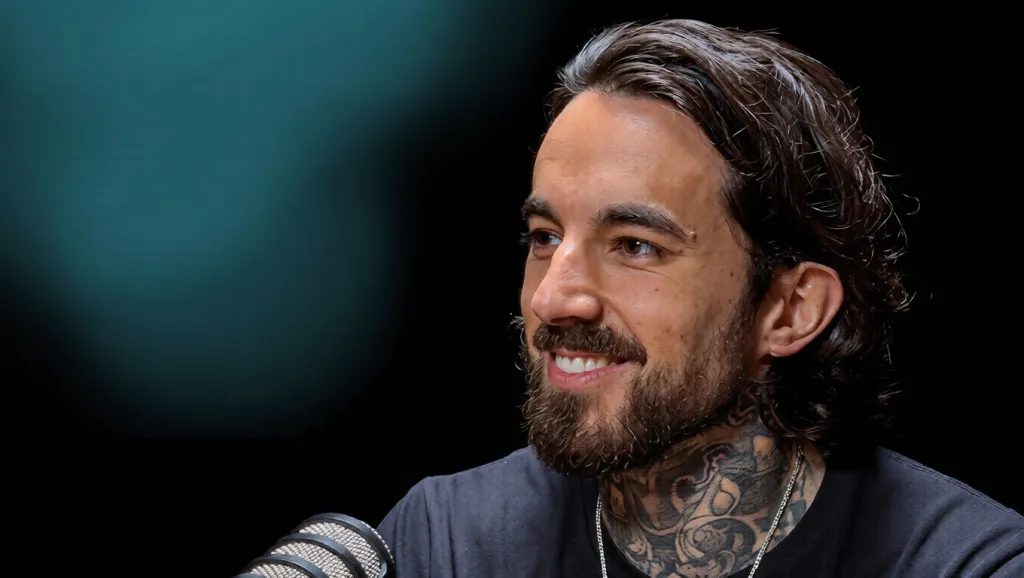
René ZZ’s Soul Map: From a Tattooed Body to a Heart Restored by God
Se Buscan Rebeldes
10 April, 2026
7 min
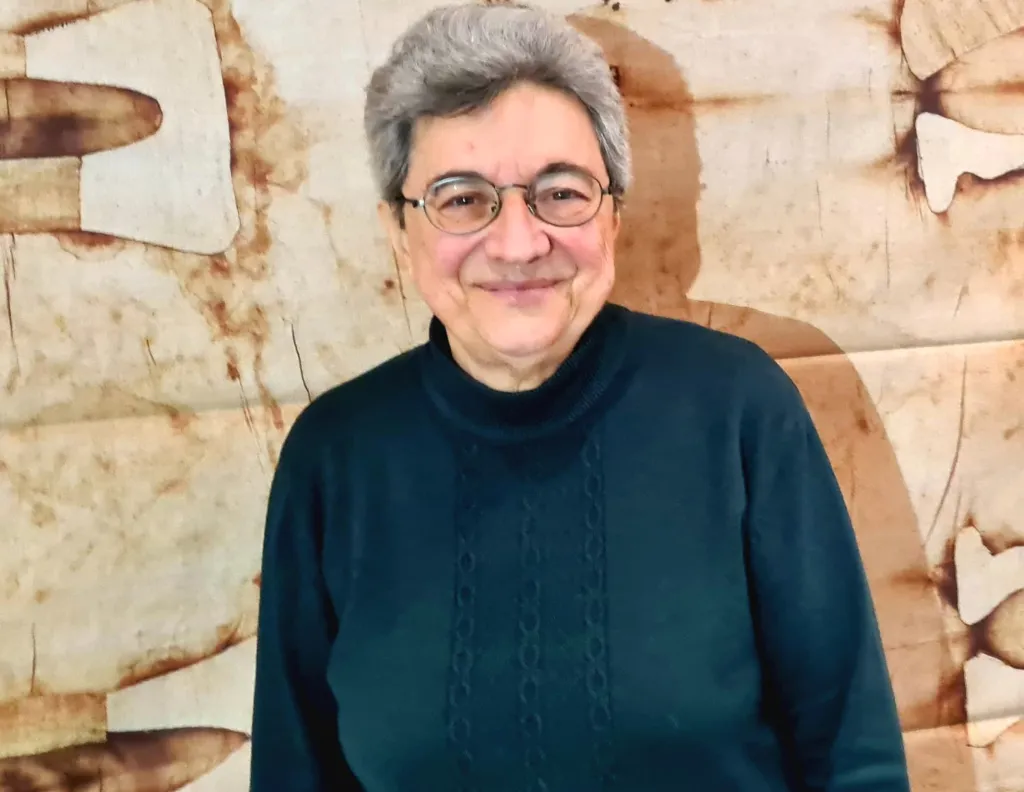
The Shroud disturbs those who do not want to encounter Christ in their lives
Wlodzimierz Redzioch
03 April, 2026
4 min
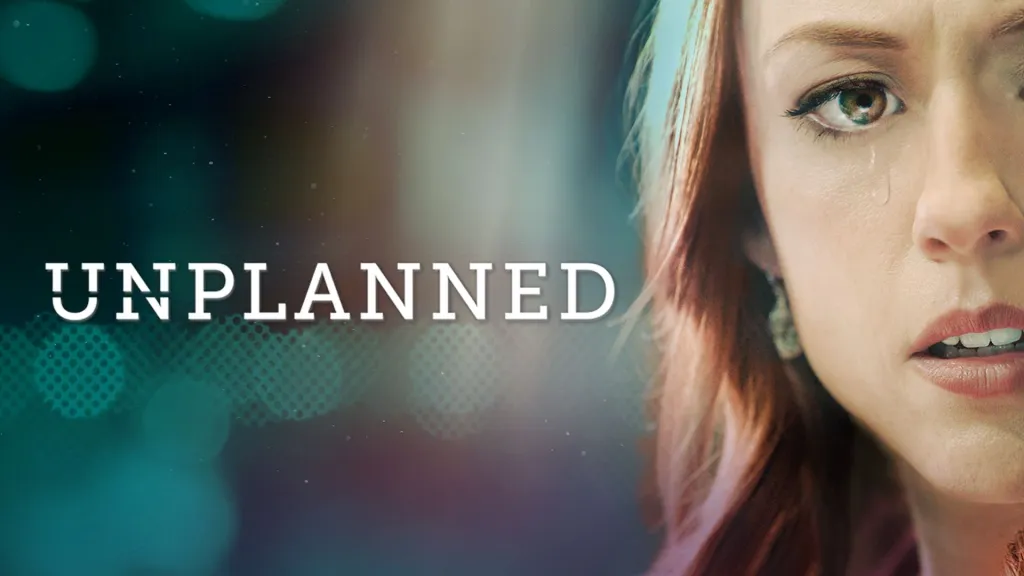
Marta Velarde: “Spain trivializes abortion and is one of the countries with the highest abortion rates”
Exaudi Staff
02 April, 2026
5 min
The best vocations are at this table
Se Buscan Rebeldes
31 March, 2026
6 min