 (EN)
(EN)
 (ES)
(ES)
 (IT)
(IT)

Euthanasia and Mental Illness
An Ethical Boundary We Cannot Ignore
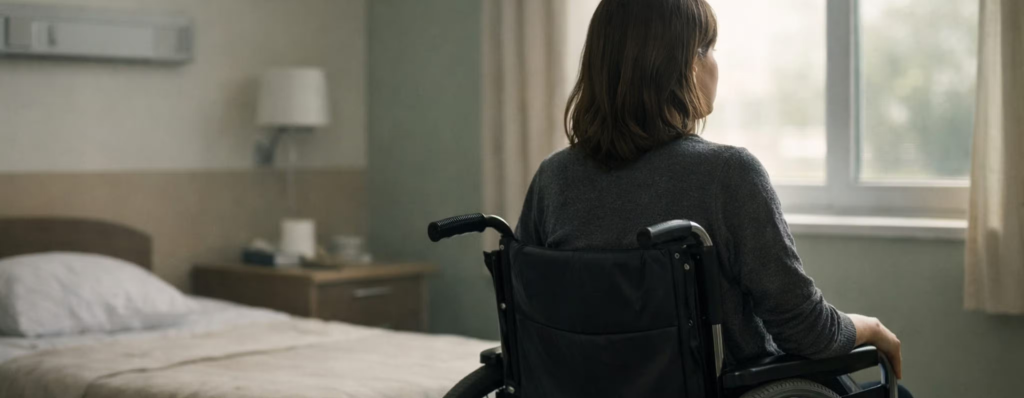

The case of Noelia, the 24-year-old whose euthanasia was carried out yesterday, Thursday, in Barcelona, once again places at the center of the debate one of the most delicate issues of our time: the very legality and the ethical, medical and legal limits of euthanasia, especially when mental disorders come into play.
Noelia suffered a spinal cord injury as a result of a suicide attempt in 2022. Since then, she had lived in a care facility and used a wheelchair. She first requested euthanasia in 2024, and her case went through a complex legal process, marked by appeals, injunctions, and contradictory rulings. Ultimately, the European Court of Human Rights refused to halt the proceedings, allowing the process to continue.
Beyond the legal aspects, the case raises fundamental questions that directly affect the very concept of medicine, care, and human dignity. The first of these is whether a person with a history of mental illness and, in this case, a previous suicide attempt, can be considered fully capable of making a free, autonomous, and sustainable decision about their own death.
Current legislation recognizes patient autonomy as a fundamental principle. However, autonomy cannot be understood as an isolated or absolute concept. In the field of mental health, decision-making capacity requires a particularly rigorous evaluation, precisely because psychological suffering can profoundly affect the perception of reality, hope, and the will to live.

Several studies have shown that the desire to die in patients with mental disorders is not usually stable, but rather fluctuates and is highly influenced by treatable factors such as depression, loneliness, or emotional pain. This raises the question of whether, in these cases, the appropriate response should be to facilitate death or to redouble therapeutic and support efforts.
In this regard, the lack of mandatory protocols to ensure that a patient with mental illness has received adequate psychological and psychiatric care before euthanasia is authorized is particularly worrying. When this requirement is not clearly established, there is a risk that irreversible decisions will be made without fully exploring all treatment options.
Noelia’s case seems to fall precisely into this area of uncertainty. According to reports, she had a recognized significant disability due to a mental disorder before her suicide attempt, and her subsequent situation further aggravated her condition. This suggests that the suffering she expressed could not be understood solely in physical terms, but rather had a complex root in which psychological factors played a decisive role.
Given this scenario, it’s worth asking whether euthanasia isn’t, in some cases, the response to a prior failure: the failure of a system that hasn’t been able, or hasn’t wanted, to offer real alternatives for treatment, care, and support. When a person asks to die, what they are often expressing is a need for help that hasn’t been met.
Medicine, from its origins, has aimed to cure when possible, alleviate when not, prevent suffering, and care for and support the patient at all stages of life. Making death a healthcare service, especially in contexts of psychological vulnerability, represents a profound transformation of this ethical framework.
On the other hand, the fact that a decision is “firm, free, and autonomous” does not necessarily mean that it must be carried out without question. Society sets limits on individual autonomy when fundamental goods such as life are at stake. We do this in many areas: from suicide prevention to protecting vulnerable people from decisions that could harm them irreversibly.
In this sense, euthanasia applied to patients with mental illness presents a difficult tension to resolve between respect for autonomy and the duty to protect. Tilting the balance exclusively toward the former can lead to neglecting the latter, with far-reaching ethical consequences.
Noelia’s case is not just an individual case. It is a symptom of a broader issue that challenges all of society: how we want to care for those who suffer, especially when that suffering is not only physical, but also emotional and psychological.
If the response we offer is to facilitate death – with the cooperation of the healthcare professionals involved – without having previously exhausted all avenues of treatment and support, we run the risk of normalizing a form of abandonment that contradicts the most basic principles of a society that aspires to be truly humane.
Ultimately, the debate on euthanasia is not merely a legal or medical one, but a profoundly anthropological one. It forces us to ask ourselves what value we place on life, on vulnerability, and what kind of society we want to build: one that accompanies, cares for, and supports… or one that, faced with suffering, chooses to eliminate the one who suffers.
The cause of death listed—as required by law—on Noelia’s death certificate is “natural death.” Is it natural to kill a patient? Rest in peace.
Julio Tudela Cuenca. Director of the Bioethics Observatory at the Catholic University of Valencia
*Article published in the newspaper Las Provincias on March 28, 2026

Observatorio de Bioética UCV
El Observatorio de Bioética se encuentra dentro del Instituto Ciencias de la vida de la Universidad Católica de Valencia “San Vicente Mártir” . En el trasfondo de sus publicaciones, se defiende la vida humana desde la fecundación a la muerte natural y la dignidad de la persona, teniendo como objetivo aunar esfuerzos para difundir la cultura de la vida como la define la Evangelium Vitae.
Related
What Now?
Javier Ferrer García
06 April, 2026
3 min

It’s not just who you are that matters, but also the world you grow up in
Marketing y Servicios
06 April, 2026
3 min

A Different Vision for Business Leaders and Politicians
Alejandro Fontana
06 April, 2026
5 min
Jennings Bet No Deposit Bonus Eligibility For UK Players
Alberto Ramírez
06 April, 2026
9 min