 (EN)
(EN)
 (ES)
(ES)
 (IT)
(IT)

Distributism and Small Property in Chesterton
An Alternative Vision to Capitalism and Socialism, with Christian Roots


Dale Ahlquist says that “G. K. Chesterton, Hilaire Belloc, and others embraced the teachings of Pope Leo XIII and developed a social and economic movement known as Distributism, distinct from socialism and capitalism (…), based on the rights of the family and the idea that a society and its economy should serve to protect, nurture, and promote this primary institution” (The Complete Thinker: The Marvelous Mind of G.K. Chesterton, p. 168). Indeed, Chesterton compiled several of his social writings in his book The Limits of Sanity: Distributism and the Social Question (The Dumb Ox, 2010), developing his ideas about small property widely distributed among ordinary citizens.
For Chesterton, small property is beautiful and the practical condition for exercising freedom. This freedom allows the common man to be independent and not dependent on a centralized state or an equally centralized and bureaucratic commercial system. He envisions a free market that allows for the development of small businesses and the broadest distribution of property among citizens, so that wages allow them to take the step toward ownership. Instead of large transnational corporations, he prefers a society that facilitates the existence and viability of small businesses. Something similar to what is now being encouraged with the return to nature: organic farming, free-range eggs, and experiential tourism. Spaces that favor small producers rather than large retailers. As he says, fostering models of exchange that bring the cow and the milk closer to the end consumer, in such a way that the face of the producer, so often hidden by the mechanisms of marketing, becomes visible.
Distributism is inspired by the social doctrine of the Church, although it is not the only way to put it into practice. In this, Chesterton, such a lover of liberty, was clear. He didn’t intend for society to become distributist, much less offer the perfect formula for social organization; he proposed proportion. “We wish,” he said, “to correct the proportions of the modern state; but proportion is given between different things, and a proportion is almost never a mold (…). We do not propose that in a healthy society all land should be occupied in the same way, nor that all property should be possessed under the same conditions, nor that all citizens should have the same relationship to the city. All we maintain is that central power needs lesser powers to counterbalance and restrain it, and that these must be of many kinds: some individual, some communal, some official, etc.” His social proposal, as can be seen, is symphonic and polychromatic, quite far from the unifying modes of some models of economic organization.
A key element of distributism is the principle of subsidiarity, part of the Church’s social doctrine: what the person or the lesser society can and should do for themselves that the larger society cannot. It is a call to exercise what is rightfully the human being or natural units such as the family. It also awakens a sense of responsibility to assume the obligations derived from the talents received. A subsidiarity, therefore, alien to the collectivist mentality that leads to the abandonment of rights and duties, expecting the State to resolve everything. Certainly, distributism and subsidiarity promote the entrepreneurial spirit with all that it entails in terms of the desire for achievement, initiative, creativity, and desire to serve.
And technology, the machines? Let them come and take their place: their role is to be means, instruments that foster the good life. “Humanity,” Chesterton argues, “has the right to renounce the machine and live off the land if it truly pleases them more, just as anyone has the right to sell their old bicycle and walk if it pleases them more. Obviously, they will travel more slowly, but it is not their duty to go faster.”
For a society like ours, where effectiveness, efficiency, productivity, and profit maximization dictate the pace of life, a proposal like distributism is shocking and utopian, but that doesn’t make it any less impossible. Indeed, it may be a path to the existence of small oases of fresh air and clear water amidst the burdens of our mass society, a counterweight to the excesses of technology and hyperactivity.

Francisco Bobadilla
Francisco Bobadilla es profesor principal de la Universidad de Piura, donde dicta clases para el pre-grado y posgrado. Interesado en las Humanidades y en la dimensión ética de la conducta humana. Lector habitual, de cuyas lecturas se nutre en gran parte este blog. Es autor, entre otros, de los libros “Pasión por la Excelencia”, “Empresas con alma”, «Progreso económico y desarrollo humano», «El Código da Vinci: de la ficción a la realidad»; «La disponibilidad de los derechos de la personalidad». Abogado y Master en Derecho Civil por la PUCP, doctor en Derecho por la Universidad de Zaragoza; Licenciado en Ciencias de la Información por la Universidad de Piura. Sus temas: pensamiento político y social, ética y cultura, derechos de la persona.
Related
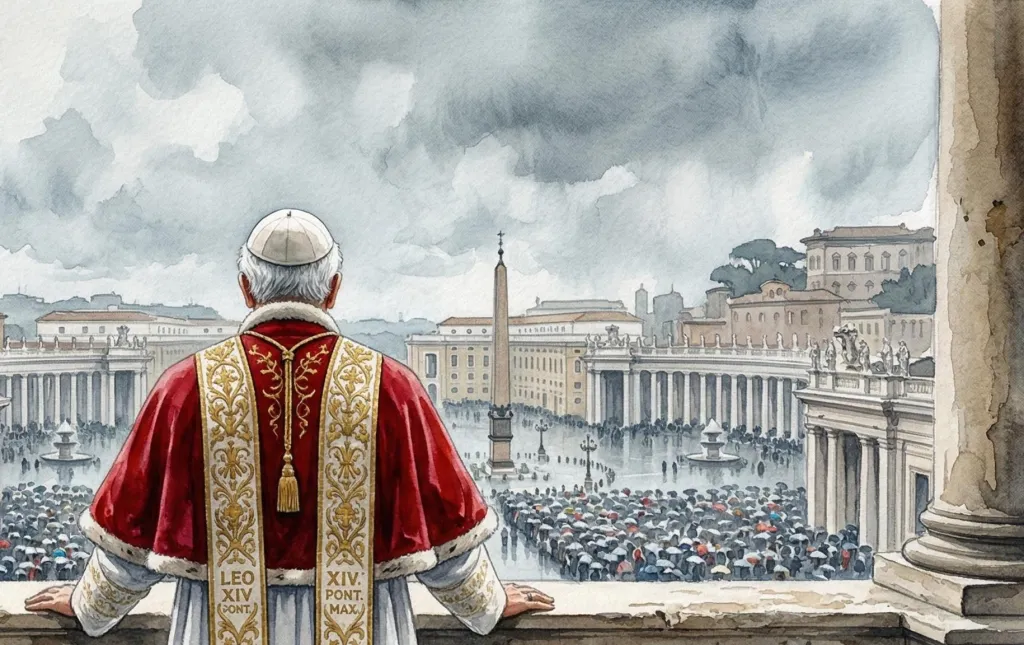
Pope Leo XIV’s First Holy Week: A Call to Light, Hope, and Peace in a World of Darkness
Valentina Alazraki
07 April, 2026
4 min

Living with Meaning and Purpose
María José Calvo
07 April, 2026
4 min
The “steps” that EASTER asks of us all
Mario J. Paredes
04 April, 2026
4 min
The Cross
Juan Francisco Miguel
04 April, 2026
3 min