(EN)
(EN)
 (ES)
(ES)
 (IT)
(IT)

Cardinal Arizmendi: Meeting of Indigenous Translators
91 Indigenous translators gathered in Mexico to promote the inculturation of the liturgy

Cardinal Felipe Arizmendi , Bishop Emeritus of San Cristóbal de Las Casas and responsible for the Doctrine of the Faith at the Mexican Episcopal Conference (CEM) , offers Exaudi readers his weekly article.
FACTS
This week, in Mexico City next to the Basilica of Guadalupe, we held the Second Meeting on Indigenous Liturgical Translations and Adaptations, with the aim of sharing experiences from the dioceses, analyzing biblical, liturgical and cultural criteria on liturgical translations and adaptations, and proposing processes to continue the inculturation of the liturgy in the native peoples.
91 people from the Zapotec, Otomi, Mayan, Mixtec, Purépecha, Nahuatl, Tseltal, Totonaca, Rarámuri, Ténec, Tsotsil, Mam, Popoluca, Mixe, Chinantec, Mazahua, Chatina, Amuzgo, Ch’ol and Wixárika ethnic groups participated. Someone from the Guarayan culture came from Bolivia; from Colombia, from the Embera and Tucano cultures; from Guatemala, from the Mam and Mayan Chuj culture.
We were joined by Bishop Aurelio García, Undersecretary of the Dicastery for Divine Worship and the Discipline of the Sacraments; Archbishop Víctor Sánchez of Puebla, President of the Commission for Liturgical Pastoral Care; and Bishop Adolfo Castaño, Bishop-elect of Atlacomulco and President of the Episcopal Commission for Prophetic Pastoral Care. Also present were the bishops responsible for the Episcopal Dimensions of Liturgy, Archbishop Raúl Gómez of Toluca; Doctrine of the Faith, Bishop Guadalupe Antonio Ruiz Urquín of Huautla; Biblical Pastoral Animation, Bishop Gonzalo Alonso Calzada of Tehuacán; Indigenous and Afro-descendant Peoples, Bishop José Hiraís of Huejutla; and Education and Culture, Father Eduardo Corral, Secretary of that Dimension, representing the bishop.
The support of the Dicastery for Divine Worship is noteworthy, because we feel we are not doing anything wrong. Rome gives us norms and guidelines, not to judge and condemn, but to open paths for us. For some years, we didn’t perceive it that way; therefore, it was very moving to experience their closeness and their willingness to offer us sound and reliable criteria. The Dicastery accompanies us, understands us, and encourages us.
It was very encouraging to see such an enthusiastic response from those interested in providing this service to our indigenous communities. I had estimated that about 35 people would participate, and 91 came. Others wanted to come, but there was no more room. And I want to highlight the vibrant and active presence of young people, which guarantees continuity, and also the large number of women, which ensures fidelity to the cultures. Even though some haven’t finished primary school, they carry the language in their hearts and defend it with all their being.
LIGHTNING
The Incarnation is a model of inculturation: “The Word became flesh and dwelt among us” (Jn 1:14). Jesus is the way of the Church. The Incarnation of the eternal Son of the Father continues in the incarnation of the Church within cultures, through the work of the Holy Spirit. Inculturation is both a consequence and an expression of the Incarnation. The eternal Word of the Father was incarnated in a marginalized culture and language, Aramaic. He knew Hebrew, the dominant language, but his mother tongue was Aramaic.
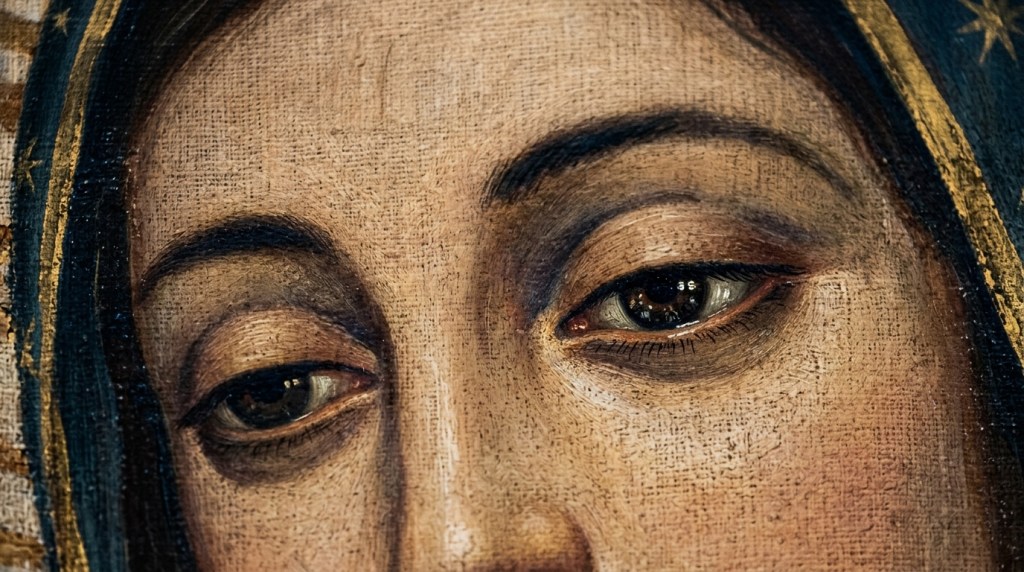
The Virgin of Guadalupe did not speak Spanish, the language of the conquerors, but Nahuatl, the language of the conquered. It was not her native tongue, but she became deeply immersed in both the language and culture of Nahuatl. The Virgin Mary has always shown herself to be very close to the vulnerable, to those who suffer, to the poor, and to the oppressed.
The Second Vatican Council already stated this 63 years ago, but it seems we still don’t heed it: “The Church does not seek to impose rigid uniformity in matters that do not affect the faith or the good of the whole community, not even in the liturgy; on the contrary, she respects and promotes the genius and distinctive qualities of different races and peoples. She studies with sympathy and, if possible, preserves intact what she finds in the customs of peoples that is not inextricably linked to superstitions and errors, and sometimes even accepts them in the liturgy itself, provided they can be harmonized with the true and authentic liturgical spirit.”
Pope Francis told us: “The particular Churches must actively foster at least incipient forms of inculturation. If we allow doubts and fears to stifle all boldness, it is possible that, instead of being creative, we will simply remain comfortable and not bring about any progress, and in that case, we will not be participants in historical processes with our cooperation, but simply spectators of an unfruitful stagnation of the Church.”
This allows us to incorporate into the liturgy many elements characteristic of the indigenous peoples’ experience in their intimate contact with nature and to encourage native expressions in songs, dances, rites, gestures, and symbols. The Second Vatican Council had already called for this effort to inculturate the liturgy among indigenous peoples, but more than fifty years have passed and we have made little progress in this area.”
ACTIONS
Let us appreciate, value, respect, and promote indigenous cultures, for they are an expression of God’s wisdom and the gifts of the Holy Spirit; they are a treasure in the Church. May these cultures not be lost, but rather may we be their allies in their preservation and development.

Cardenal Felipe Arizmendi
Nacido en Chiltepec el 1 de mayo de 1940. Estudió Humanidades y Filosofía en el Seminario de Toluca, de 1952 a 1959. Cursó la Teología en la Universidad Pontificia de Salamanca, España, de 1959 a 1963, obteniendo la licenciatura en Teología Dogmática. Por su cuenta, se especializó en Liturgia. Fue ordenado sacerdote el 25 de agosto de 1963 en Toluca. Sirvió como Vicario Parroquial en tres parroquias por tres años y medio y fue párroco de una comunidad indígena otomí, de 1967 a 1970. Fue Director Espiritual del Seminario de Toluca por diez años, y Rector del mismo de 1981 a 1991. El 7 de marzo de 1991, fue ordenado obispo de la diócesis de Tapachula, donde estuvo hasta el 30 de abril del año 2000. El 1 de mayo del 2000, inició su ministerio episcopal como XLVI obispo de la diócesis de San Cristóbal de las Casas, Chiapas, una de las diócesis más antiguas de México, erigida en 1539; allí sirvió por casi 18 años. Ha ocupado diversos cargos en la Conferencia del Episcopado Mexicano y en el CELAM. El 3 de noviembre de 2017, el Papa Francisco le aceptó, por edad, su renuncia al servicio episcopal en esta diócesis, que entregó a su sucesor el 3 de enero de 2018. Desde entonces, reside en la ciudad de Toluca. Desde 1979, escribe artículos de actualidad en varios medios religiosos y civiles. Es autor de varias publicaciones.