(EN)
(EN)
 (ES)
(ES)
 (IT)
(IT)

By the SICK, We Will Be Known
The compassion of the Samaritan as a path of love and solidarity in the 2026 World Day of the Sick
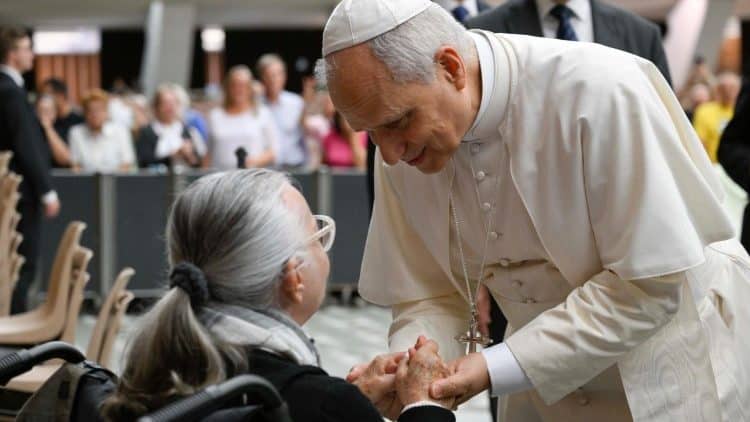

Every February 11, the world observes THE DAY OF THE SICK. For 34 years, the Catholic Church has observed this day with a message from the Pope, which, in 2026, will reflect on: “The compassion of the Samaritan: loving by bearing the pain of the other.” This 34th Day of the Sick will have as its epicenter the city of Chiclayo in Peru, the diocese that served as the seat of the episcopal ministry of then-Monsignor Robert Prevost (2015–2023), now Leo XIV.
St. John Paul II established the World Day of the Sick in 1992 to dedicate space to prayer, solidarity, accompaniment, and reflection on the shortcomings and hardships in health experienced by millions of people.
This year, through this solemn observance in Peru, the Pope calls on the Church and the world to center their gaze on Latin America. As CEO of SOMOS Community Care, an organization dedicated to the health of New York City residents and that coordinates a network of more than 2,500 physicians and their private clinics, with an emphasis on providing healthcare to vulnerable and immigrant populations, I will share with you some reflections on the importance of this Day, on health and the sick in our society, and some lessons that the Samaritan – from the parable of the Gospel – offers believers in Christ and every man and woman of good will.
The annual observance of the WORLD DAY OF THE SICK is especially relevant because it summons us all to an awareness of the theme of health, illness, the sick, their families, medical personnel, and all those dedicated to the care of the sick. This Day issues a call to all social institutions to raise awareness of the urgent need to support and accompany the sick and their loved ones, in every possible and necessary way.
But also, this date observes and recognizes the human suffering that every disease entails and the necessary search for the transcendent meaning of life as a task for every human being and, especially, for those who suffer while they are sick.
The Pope’s annual message for this Day provides ethical, moral, and pastoral guidance for both the Church and society as a whole, with calls to prayer and action, to overcome indifference and promote compassion and human solidarity, taking into account the value of life, dignity of the human person, need for fraternal relationships that combat loneliness and isolation, and hope as a refuge and bulwark in the face of tribulation and anguish. All of this takes place in a society marked by a culture of ‘discarding’ and ruthless utilitarianism and materialism.
HEALTH cannot be defined simply and negatively, as the absence of disease. Health is so much more: the foundation on which we build our personal and family lives and our lives in community. For this reason, the World Health Organization (WHO) defines health as a “state of complete physical, mental, and social well-being.”
Health for everyone is the engine of existence and our most valuable resource and treasure, because, without it, all other human goals and aspirations become impossible, chimeras.
In health, human beings enjoy autonomy and freedom. We can achieve potential development, quality of life, success, longevity, and daily satisfaction that drives us in our search for truth, the meaning of life, and happiness.
The importance of health explains why it is a person’s fundamental right. For these same reasons, health also becomes the engine of every society’s progress. Health enables communities to achieve economic productivity, personal development, social cohesion, and the sustainability of public health systems. Health, then, should not be – in any society – a privilege. Instead, health should be a social guarantee that ensures a dignified life for each person.
So why speak of THE IMPORTANCE OF THE SICK IN SOCIETY? Because every person who is ill brings us back down to earth, reminding us of our humble, fragile, and vulnerable human condition—and our need for solidarity. Every sick person summons us to empathy and fraternal compassion, and mercy. Every sick brother or sister invites us to care for and respect the inalienable and inviolable dignity of every human being.
Each patient, each disease becomes the driving force propelling medical scientific research and, ultimately, the development and progress of social health services. The sick also contribute to family and social unity and cohesion, and to the valuation, in all, of health and healthier lifestyles for the collective prevention of diseases. In short, patients reflect on and measure the ethical and moral quality of a society.
Finally, THE FIGURE OF THE SAMARITAN in the parable of Jesus of Nazareth, the theme of this World Day of the Sick 2026, invites us always to live in the love that serves, especially to love our fallen brothers and sisters in need.
But what must we do to achieve eternal life? What must we do to be happy? We must practice mercy. But how to love: to treat others as the Good Samaritan did, who:
- Even though he was traveling, occupied with his own affairs…
- He went to the man in need: he paused, approached him, and took the initiative,
- He saw him: because we almost always pass by without wanting to see others and their needs,
- He felt pity, compassion, piety, and mercy. The entirety of his inner being trembled, a shudder urging him to act, solve, heal, save,
- He approached him,
- He bandaged his wounds,
- With oil and wine: luxury products at the time,
- He rode him on his own horse: in his own personal history and living conditions,
- He took him to an inn: the best lodging of the time,
- He cared for him: he committed himself to the life of a brother in need,
- He paid – in advance – for his care,
- He asked that they take care of him,
- He promised to return for him,
- In short, he made the other’s problems his own.
Letter:
LETTER OF THE HOLY FATHER LEO XIV TO THE SPECIAL ENVOY ON THE OCCASION OF THE XXXIV WORLD DAY OF THE SICK
[Shrine of Our Lady of Peace, Diocese of Chiclayo (Peru) February 11, 2026]
To our Venerable Brother MICHAEL S.R.E. Cardinal CZERNY, S.I. Prefect of the Dicastery for Promoting Integral Human Development
From the moment the God of Peace called us and established us in the See of Saint Peter, we frequently turn our spirit—with all the affection of our heart and mind—toward the beloved land of Peru, whose faithful, guided by piety and love, confidently seek refuge under the protection of the Most Holy Virgin Mary. Indeed, twelve years ago, in the cathedral dedicated to Saint Mary Mother of God, we were raised to the sacred order of the episcopate for the diocese of Chiclayo, so dear to us, and since then we have ceaselessly entrusted—with solicitude—to the Most Holy Virgin not only our apostolic mission, but also the progress in the Christian faith of the holy People of God and, now in a special way, of the entire Church.
By divine providence, it later came to pass that Pope Francis, of happy memory, wished the XXXIV World Day of the Sick to be held precisely in this land of Peru, in order to express with greater intensity the maternal solicitude of the Most Holy Virgin Mary toward all those who suffer various pains and illnesses—a wish that we ourselves have gratefully accepted. With the favorable opinion of the Episcopal Conference of Peru, we gladly confirm that the aforementioned World Day in 2026 will take place and be solemnly celebrated at the Shrine of Our Lady of Peace, in the diocese of Chiclayo, where we too, in the past, have on several occasions invoked God’s help in our prayers.
Therefore, on this occasion, in special union of prayer with the Church spread throughout the world—for all the faithful who are sick and afflicted by diseases, pathologies, or pains—we humbly ask that they, sustained by this maternal intercession, graciously offer to the merciful God, through Mary, for the peace of this world, all the discomforts of their lives. For, as Saint Augustine most aptly teaches, the human soul is restless, and only in the ineffable charity of God and in its application to daily and spiritual life can it find true and lasting peace (cf. Saint Augustine, Confessions, I, 1, 1).
Desiring to fulfill with vigilant spirit the office of universal Pastor of the Church, we have chosen you, our venerable brother, as our representative in the person of the Successor of Peter, so that you may carefully instruct the people gathered in the wisdom of the Gospel; and by virtue of this Letter, we declare you our Special Envoy to the aforementioned event, which will be solemnly celebrated on the 11th of next February, on the liturgical memorial of the Most Holy Virgin Mary of Lourdes.
You will preside over the sacred rites in our name, bringing to the Christian faithful gathered there—especially to all the sick—the consolation and comfort of the Gospel, flowing from the ineffable communion of Christ, who promised to be with us in all circumstances, all days, until the end of the age (cf. Mt 28:20).
Finally, we earnestly request, our venerable brother, that you cordially greet all the brothers in the episcopate present there, the civil authorities, the priests, the deacons, and the members of institutes of consecrated life, as well as the lay faithful and, above all, all the sick and those who assist them, showing them our benevolence. We exhort everyone to bear witness to the theological virtues—faith, hope, and charity—and to human and Christian closeness in their needs, bearing one another’s burdens and so fulfilling the law of Christ (cf. Gal 6:2) from the depths of the heart.
Entrusting your mission, our venerable brother, to the protection of the Most Holy Virgin Mary of Peace, we gladly impart to you our Apostolic Blessing, pledge of heavenly graces, which we wish to extend to all participants in this World Day of the Sick.
From the Vatican, January 21, 2026, the first year of our Pontificate.
LEO PP. XIV

Mario J. Paredes
Presidente ejecutivo de SOMOS Community Care, una red de 2,600 médicos independientes -en su mayoría de atención primaria- que atienden a cerca de un millón de los pacientes más vulnerables del Medicaid de la Ciudad de Nueva York
Related
Pope Leo XIV gives a gentle but clear rebuke to the media: “Not everything is a response to Trump”
Valentina Alazraki
19 April, 2026
3 min
Pope Leo XIV in Douala: An Urgent Appeal Against Hunger and Poverty in the Economic Heart of Cameroon
Valentina Alazraki
19 April, 2026
3 min
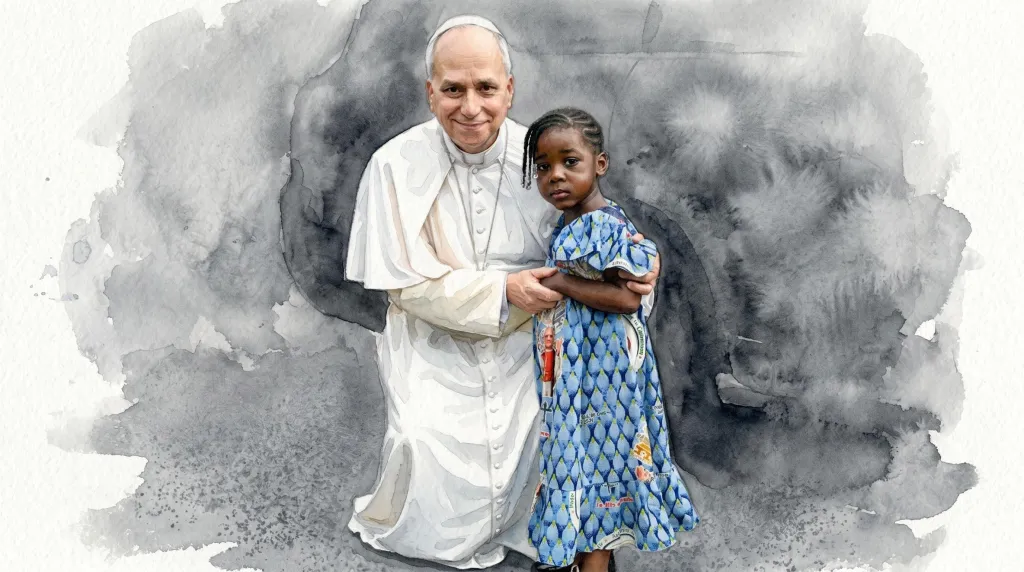
Pope Leo XIV reaches the heart of the conflict in Bamenda: a cry for peace amidst blood and suffering
Valentina Alazraki
17 April, 2026
4 min
Can kindness transform the world?
Tomasa Calvo
17 April, 2026
6 min
Newsletter
Every month, Exaudi touches the lives of many through training, truth, and support
Join our communication channels and share them.